
The Sales Experiment That Failed.... And Still Pushed Us Forward
What happens when you chase scale without structure.

At Undergrads, we’ve always believed in moving fast.
Sometimes that speed looks like brilliance. Other times… it looks like this.
The Conviction 🚀
When we first brought up the idea, Aadil was clear:
“Let’s not bring in sales interns.”
He wasn’t wrong. He saw the cracks before we even started.
But me and Rimaz? We couldn’t resist.
We reframed it. we pitched it back to Aadil as a structured experiment:
Commission-only during training.
Training ends the moment they hit a small minimal target.
Then → full-time with base + commission.
To his credit, Aadil still gave us his upvote not because he thought it was perfect, but because he trusted us enough to try.
And so we went all in.
We spread across geographies:
Egypt → MENA.
Kuwait → GCC.
Berlin → EU startups.
Malaysia → SEA.
The thesis was simple: local voices can open doors better than outsiders.
On paper, it was genius.
Once we got the green light, we went all in.
Onboarding happened fast people from Egypt, Kuwait, Berlin, and Malaysia suddenly became part of Undergrads.
The structure was simple but strict:
Commission-only during training.
Hit the minimal target → training ends.
Get converted to base + commission, full-time.
It was designed to filter out who was serious and who wasn’t.
And soon enough, the first calls started rolling in.
One message popped up on my phone:
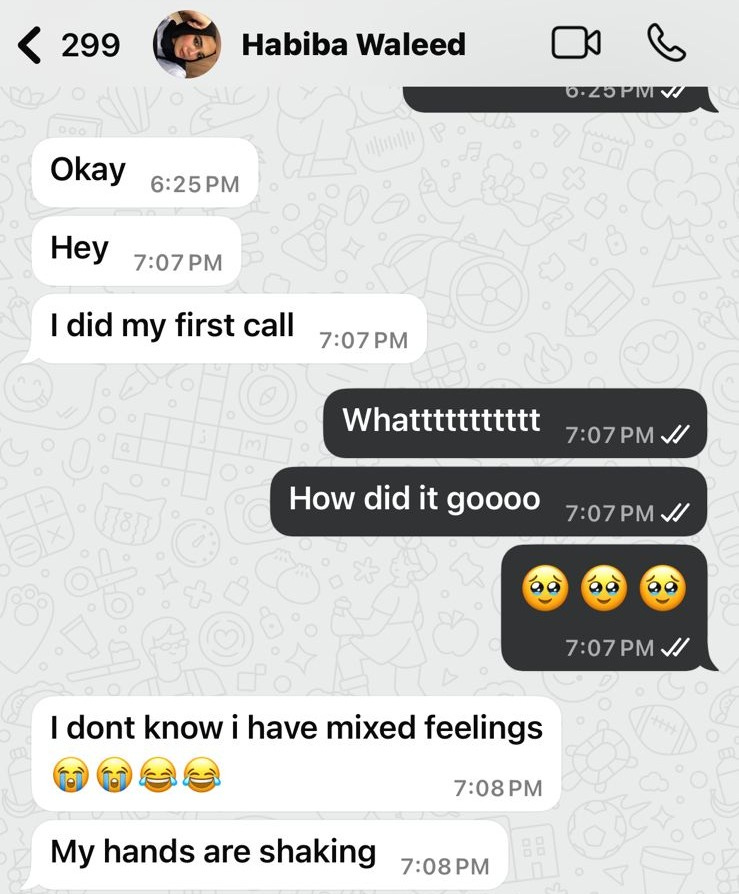
“I did my first call. My hands are shaking 😭😂”
That was the reality. Nervous voices, shaky hands, real people putting themselves out there for Undergrads.
Another message read:
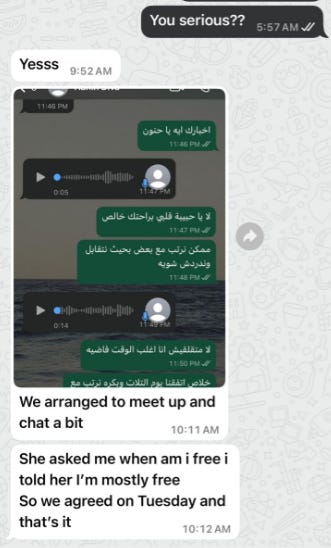
“We arranged to meet up and chat a bit. We agreed on Tuesday.”
It felt surreal. Calls were happening. Leads were moving.
From Bangalore, I was watching energy spark across time zones.
For a moment, we thought: Damn, this might actually work.
The Fuckup 💥
Here’s the truth: we didn’t achieve what we thought we would.
We believed hiring people across key locations, giving them a commission-only training period, and then upgrading them once they hit a minimal target would be the leanest way to expand sales.
But reality had other plans:
Drop-offs drained momentum. By the time someone got close to the target, they’d either burn out or vanish.
Context was missing. They were eager but didn’t know how to talk like us, think like us, or sell like us.
We lost focus. Instead of founders doubling down on building process, we were babysitting a chaotic experiment.
Numbers lied. On Slack, things looked active.. calls happening, leads pinged… but real conversions weren’t moving.
The hardest pill to swallow?
It wasn’t that the model was wrong. In fact, the model was brilliant. It filtered for hungry talent, kept costs lean, and opened doors in markets we’d never reach alone.
The real failure was ours:
No proper structure.
No SOPs.
No training frameworks.
Without those, the model collapsed under its own weight.
That’s when it hit us: a great model without structure is just chaos.
And Aadil? He wasn’t wrong to be cautious. He saw that we weren’t ready with the structure and he was right.
This was a fuckup but not because the idea was flawed. It was a fuckup because we tried to scale with no systems
The Lessons 📝
If there’s one thing this experiment taught us, it’s this: a great model without structure is just chaos.
Here’s what we walked away with:
Sales has to be founder-led first.
You can’t hand over sales until you’ve built the script, the funnel, and the process yourself. Otherwise, you’re just setting people up to fail.SOPs aren’t optional.
A commission model only works if people know exactly what to do. Without a clear playbook, even the most motivated hires will burn out.Structure beats hustle.
Hustle looks good on Slack, but structure closes deals.The model still works but only with systems.
Commission-first, target-based conversion is still one of the leanest ways to grow a sales team. We just proved to ourselves how badly it fails when you run it without SOPs.
In the end, this wasn’t a lesson about abandoning the idea.
It was a lesson about execution.
But We Still Did Something 👀
Here’s the funny part.
Yes, the experiment failed.
Yes, it was messy, unstructured, and at times painful to watch unravel.
But it wasn’t meaningless.
Because in between the chaos, sparks flew:
Proof of pull. We learned that Undergrads had the gravity to bring in people from different corners of the world. We weren’t just another startup in Bangalore anymore people in Egypt, Kuwait, Berlin, Malaysia wanted to work with us. That in itself was validation.
A model worth keeping. Commission-first until a small minimal target, then base + commission it’s still one of the leanest ways to build a sales force. What failed wasn’t the design, but our lack of SOPs. With structure, this model could be unstoppable.
Geography as strategy. The whole idea of “local voices for local markets” still holds true. And in a way, this experiment set the stage for where we are today: actually operating in Berlin, Kuwait, and Bangalore.
The lesson? Not every fuckup is a dead end. Some are messy detours that still push you closer to where you were meant to go.
We didn’t get the big win we imagined but we didn’t walk away empty-handed either.
We walked away with scars, playbook ideas, and a footprint across three cities.
At Undergrads, this is what fuckups mean: not the end of the story, but another chapter in building one.